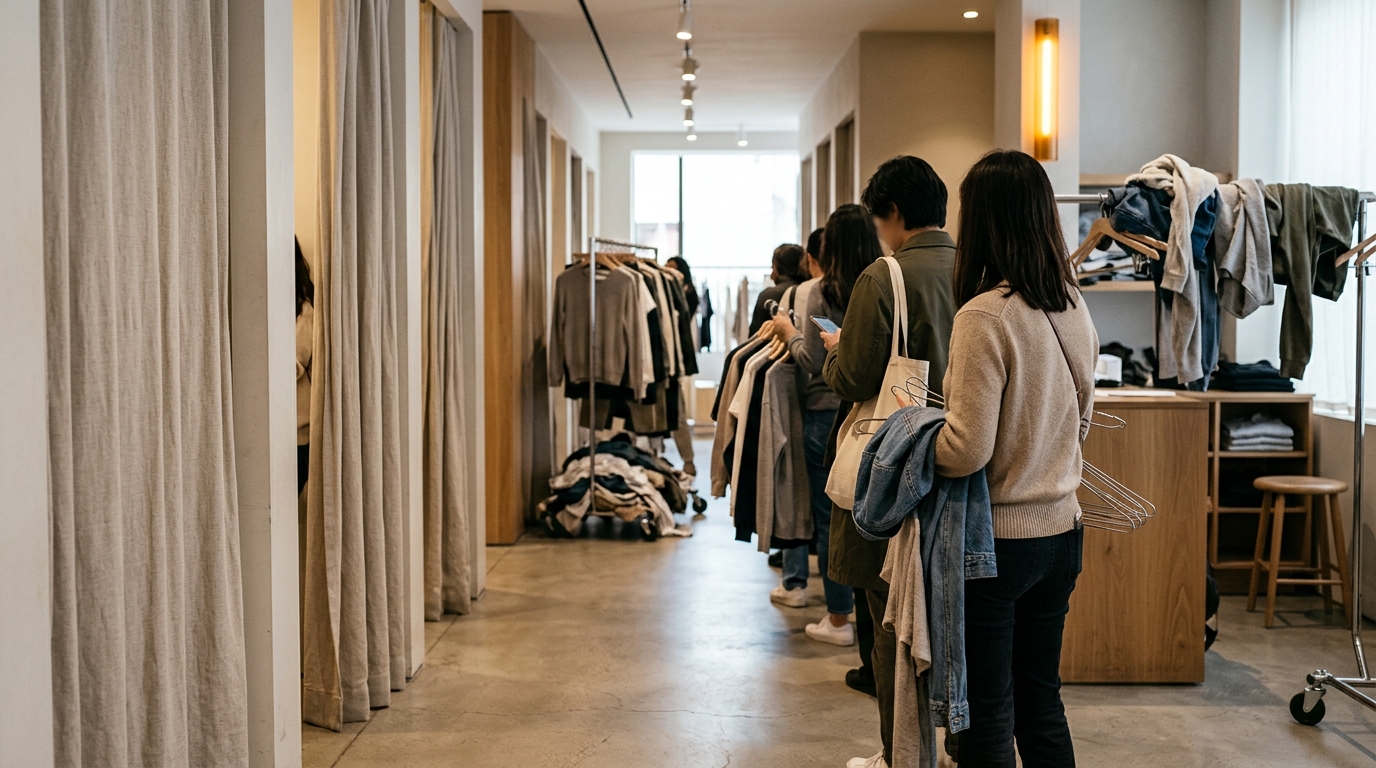
Perakendede en pahalı kuyruk kasada değil, deneme kabininin önünde oluşur. Kasadaki müşteri satın almaya karar vermiştir; kabin kuyruğundaki müşteri henüz karar vermemiştir ve beklemek zorunda kalırsa çoğu zaman hiç denemeden çıkar.
Bu yazı, mağaza içi sanal deneme (virtual try-on) kiosklarının bu darboğazı nasıl açtığını ve kurulumun sonucunu belirleyen kararları anlatıyor.
Darboğazın gerçek maliyeti
Deneme kabini kapasitesi mağazanın sabit bir kısıtıdır. Metrekare pahalıdır, kabin sayısını artırmak satış alanından çalmak demektir. Yoğun saatlerde kabin başına bekleme süresi birkaç dakikayı aştığında iki şey olur.
Birincisi, müşteri denemekten vazgeçer. Denenmeyen ürün satın alınmaz — moda perakendesinde deneme, satın alma kararının en güçlü öncülüdür.
İkincisi, müşteri daha az ürün dener. Elinde beş parçayla kuyruğa giren müşteri, sırasının geldiğini görünce ikisini rafa bırakır. Sepet büyüklüğü kabin kapasitesine göre kendini sınırlar.
Bu kayıp kasadan görünmez. Satılmayan ürün rapora düşmez; yalnızca satılan görünür. Kabin darboğazı çoğu mağazada bu yüzden ölçülmez ve dolayısıyla yönetilmez.
Sanal deneme darboğazı nasıl açıyor
Sanal deneme kiosku kabinin yerini almaz — kabine giden trafiği filtreler. Müşteri kioskta beş parçayı saniyeler içinde üzerinde görür, ikisini eler, kalan üçünü kabine götürür.
Mekanizma şu: kabin, kararın verildiği yer olmaktan çıkıp doğrulandığı yer olur. Eleme kabin dışında yapıldığı için kabin başına geçen süre kısalır ve sıra hızlanır.
Prosoft AI VTO Kiosk kurulumlarında hedeflediğimiz aralık kabin yükünde %25-45 azalma ve denenen ürün sayısında %20-40 artış. İkisinin aynı anda gerçekleşmesi çelişkili görünür ama değil: daha az fiziksel deneme, daha çok toplam deneme demektir çünkü elemenin çoğu kiosk üzerinde olur.
Kurulumu belirleyen üç karar
Kioskun konumu
Kiosk kabinin yanına konursa kuyruğu ikiye böler. Doğru yer rafla kabin arasındaki geçiş noktasıdır — müşteri ürünü eline aldıktan sonra, kuyruğa girmeden önce. Konumu mağaza planınıza göre biz belirliyoruz; kurulum keşfinin ilk maddesi budur.
Canlı stok bağlantısı
Kioskta beğenilen ürünün bedeni mağazada yoksa deneyim ters teper. Kiosk stok sistemine bağlı olmalı ve mevcut olmayan bedeni ya gizlemeli ya da alternatif önermeli. AI VTO Kiosk canlı stok entegrasyonuyla gelir — bu, sonradan eklenen bir modül değil, kurulumun standart parçası.
Danışman tableti
Kiosk tek başına bir self-servis cihazıdır. Danışmanın elindeki tablet aynı oturumu görebiliyorsa kiosk bir satış aracına dönüşür: danışman müşterinin denediklerini görür, tamamlayıcı ürün önerir. Kurulum paketinde kiosk ve tablet birlikte gelir.
En yüksek getiriyi hangi mağazalar alıyor
Sanal denemenin etkisi mağaza profiline göre değişir ve bunu kurulumdan önce öngörmek mümkündür.
En yüksek getiri yüksek trafikli ve geniş ürün yelpazeli mağazalarda ortaya çıkar. Orada kabin gerçek bir kısıttır; kısıtı gevşetmenin karşılığı doğrudan ciroya yansır. Çok katlı mağazalar, outlet formatları ve kampanya dönemlerinde yoğunlaşan lokasyonlar bu grubun tipik örnekleridir.
Orta trafikli mağazalarda etki daha çok sepet büyüklüğünde görülür: kabin kuyruğu kritik olmasa bile müşteri kioskta daha fazla ürün deneyip daha fazlasını kabine götürür.
Kumaş dökümünün belirleyici olduğu segmentlerde kiosk kararı tek başına vermez ama ön elemeyi üstlenir — müşteri kabine daha isabetli bir seçkiyle girer.
Hangi grupta olduğunuzu mağaza verilerinizle birlikte netleştiriyoruz.
Kurulumdan önce birlikte neyi ölçüyoruz
Etkiyi kanıtlayabilmek için kurulum öncesi bir referans ölçüm gerekir. Bunu keşif sürecinin parçası olarak biz yapıyoruz.
Üç veriyi topluyoruz: yoğun saatlerde ortalama kabin bekleme süresi, kabin başına ortalama ürün sayısı ve kabine giren müşterilerin satın alma oranı.
Kurulumdan sonra aynı üç veri yeniden ölçülür. Böylece yatırımın karşılığı tahmin değil, ölçüm olarak önünüze gelir — pilot mağaza kararını da bu tabloya bakarak veriyorsunuz.
Mağaza trafiğinizi ve ürün yelpazenizi paylaşırsanız beklenen aralığı demo görüşmesinde birlikte çıkarabiliriz.
In retail the most expensive queue is not at the till — it forms in front of the fitting room. The customer at the till has already decided to buy; the one in the fitting-room queue has not, and if made to wait will often leave without trying anything at all.
This piece covers how in-store virtual try-on kiosks relieve that bottleneck and which decisions shape the outcome of a rollout.
The real cost of the bottleneck
Fitting-room capacity is a fixed constraint. Floor space is expensive, and adding cubicles means taking space from selling area. Once average wait time passes a few minutes at peak hours, two things happen.
First, customers give up on trying. An untried garment does not get bought — in fashion retail, trying on is the strongest single predictor of purchase.
Second, customers try fewer items. Someone joining the queue with five garments will put two back once they see the wait. Basket size limits itself to fitting-room capacity.
None of this shows up at the till. Unsold stock leaves no record; only sales do. That is why the fitting-room bottleneck goes unmeasured in most stores — and therefore unmanaged.
How virtual try-on opens the bottleneck
A virtual try-on kiosk does not replace the fitting room — it filters the traffic going into it. The customer sees five garments on themselves within seconds, rules out two, and takes three into the cubicle.
The mechanism is this: the fitting room stops being where the decision is made and becomes where it is confirmed. Because the filtering happens outside, time per cubicle drops and the queue moves faster.
Across Prosoft AI VTO Kiosk deployments we target a 25-45% reduction in fitting-room load alongside a 20-40% increase in items tried. Those two look contradictory but are not: fewer physical try-ons means more total try-ons, because most of the filtering now happens at the kiosk.
Three decisions that shape the rollout
Where the kiosk goes
Put the kiosk next to the fitting room and it simply splits the queue in two. The right position is the transition point between the rack and the cubicle — after the customer picks something up, before they join the queue. We determine that position from your floor plan; it is the first item in the site survey.
Live stock integration
If a size the customer likes on the kiosk is not on the floor, the experience backfires. The kiosk must be connected to inventory and either hide unavailable sizes or suggest alternatives. AI VTO Kiosk ships with live stock integration — it is a standard part of the rollout, not a later add-on.
The consultant's tablet
On its own, a kiosk is a self-service device. When the sales consultant's tablet can see the same session, the kiosk becomes a selling tool: the consultant sees what the customer tried and suggests complementary items. Kiosk and tablet ship together.
Which stores see the highest return
The impact of virtual try-on varies by store profile, and that can be predicted before installation.
The highest return appears in high-traffic stores with a broad range. There the fitting room is a genuine constraint, and relieving it shows up directly in revenue. Multi-floor stores, outlet formats and locations that spike during campaigns are typical examples.
In mid-traffic stores the effect shows up mostly in basket size: even where the queue is not critical, customers try more at the kiosk and carry more into the cubicle.
In segments where drape decides the sale, the kiosk does not close the decision on its own but takes over the shortlisting — the customer walks into the cubicle with a sharper selection.
We work out which group you fall into using your own store data.
What we measure together before installation
Proving the impact requires a baseline taken before installation. We do this as part of the site survey.
We collect three numbers: average fitting-room wait at peak hours, average items taken per visit, and conversion rate among customers who enter a cubicle.
After installation the same three are measured again. That turns the return on the investment from an estimate into a measurement — and it is the same table you use to decide on the pilot store.
Share your footfall and range with us and we can size the expected effect together during the demo.
Sık sorulan sorular
Sanal deneme kiosku deneme kabinlerinin yerini alır mı?
Hayır. Kiosk kabine giden trafiği filtreler, kabinin yerini almaz. Müşteri elemeyi kioskta yapar, nihai kararı kabinde verir. Amaç kabini kaldırmak değil, kabin başına geçen süreyi kısaltmaktır.
Kurulum öncesi referans ölçümü kim yapıyor?
Prosoft VR keşif sürecinin parçası olarak yapıyor. Yoğun saatlerdeki kabin bekleme süresi, kabin başına ürün sayısı ve kabine giren müşterilerin satın alma oranı ölçülür; kurulum sonrası aynı veriler tekrarlanarak etki rakamla ortaya konur.
Kiosk kurulumu ne kadar sürüyor ve neler dahil?
Kurulum paketi kiosk donanımı, danışman tableti, yönetim paneli, canlı stok entegrasyonu ve QR ile mobil paylaşımı kapsar. Mağaza keşfi ve referans ölçümüyle başlanır, pilot mağazada devreye alınır.